Table of Contents
Introduction
Have you ever wondered how making extra payments on your mortgage could accelerate your journey to financial freedom? Visualize shaving years off your loan term while saving thousands in interest—sounds like a smart financial move, right? This powerful strategy, paired with the right tools, can transform your mortgage experience and put you in control of your home loan repayment.
Many homeowners face the daunting prospect of long mortgage terms and escalating interest costs. Understanding the ins and outs of mortgage loan amortization—the process by which loan payments are applied to principal and interest over time—is essential. Before diving into specifics, it’s important to understand mortgage loan amortization as it lays the foundation for how your payments impact your total loan cost and payoff timeline.
One of the most effective ways to optimize your mortgage payoff and reduce interest costs is by making extra payments. Extra payments can take different forms and choosing the right approach can significantly affect your financial goals. Many people also wonder about using a mortgage calculator for extra payments, which plays a crucial role in helping homeowners visualize how additional amounts influence loan amortization schedules and savings in real time.
However, it’s not just about paying extra—knowing when and how to make these payments effectively makes all the difference. For those new to mortgages or seeking to deepen their understanding, exploring topics like mortgage amortization calculator in Excel can be a great step to gaining better control of your loan and building equity faster.
In addition, understanding your mortgage payment schedule is vital to managing expectations and planning your finances smartly. This is why mastering your mortgage loan payment schedule will empower you to track progress, identify opportunities, and avoid surprises during your home loan tenure.
What You’ll Learn in This Guide
In this comprehensive guide, we’ll walk you through everything you need to know about using a mortgage loan amortization calculator with extra payments. Here’s what we’ll cover:
- Understanding Mortgage Amortization: Learn the fundamental concepts behind how mortgage payments are applied toward principal and interest over time, and why this knowledge is crucial for smart home financing decisions.
- The Impact of Extra Payments: Discover how making additional payments can reduce your loan term and save you a significant amount on interest, while also helping you build equity faster.
- Using a Mortgage Calculator Effectively: Gain practical insights into how to input your loan details and extra payments into an amortization calculator to analyze different payoff scenarios and make informed decisions.
- Benefits and Strategies: Explore the advantages of extra payments beyond interest savings, including psychological benefits and financial freedom, and learn how to implement these strategies wisely.
Throughout this article, we’ll break down various types of extra payments and explain how each one affects your mortgage amortization schedule. Whether you are considering principal-only payments, lump sums, or increased monthly payments, you will gain the clarity needed to choose the best option for your situation.
Additionally, we will provide a step-by-step guide on using a mortgage loan amortization calculator with extra payments, so you can confidently analyze your loan scenarios and make adjustments based on your financial goals.
We will also address common misconceptions about making extra mortgage payments—such as misunderstandings about prepayment penalties or the effectiveness of small extra amounts—and explain when it might be beneficial to consult with a mortgage advisor to tailor strategies to your unique financial circumstances.
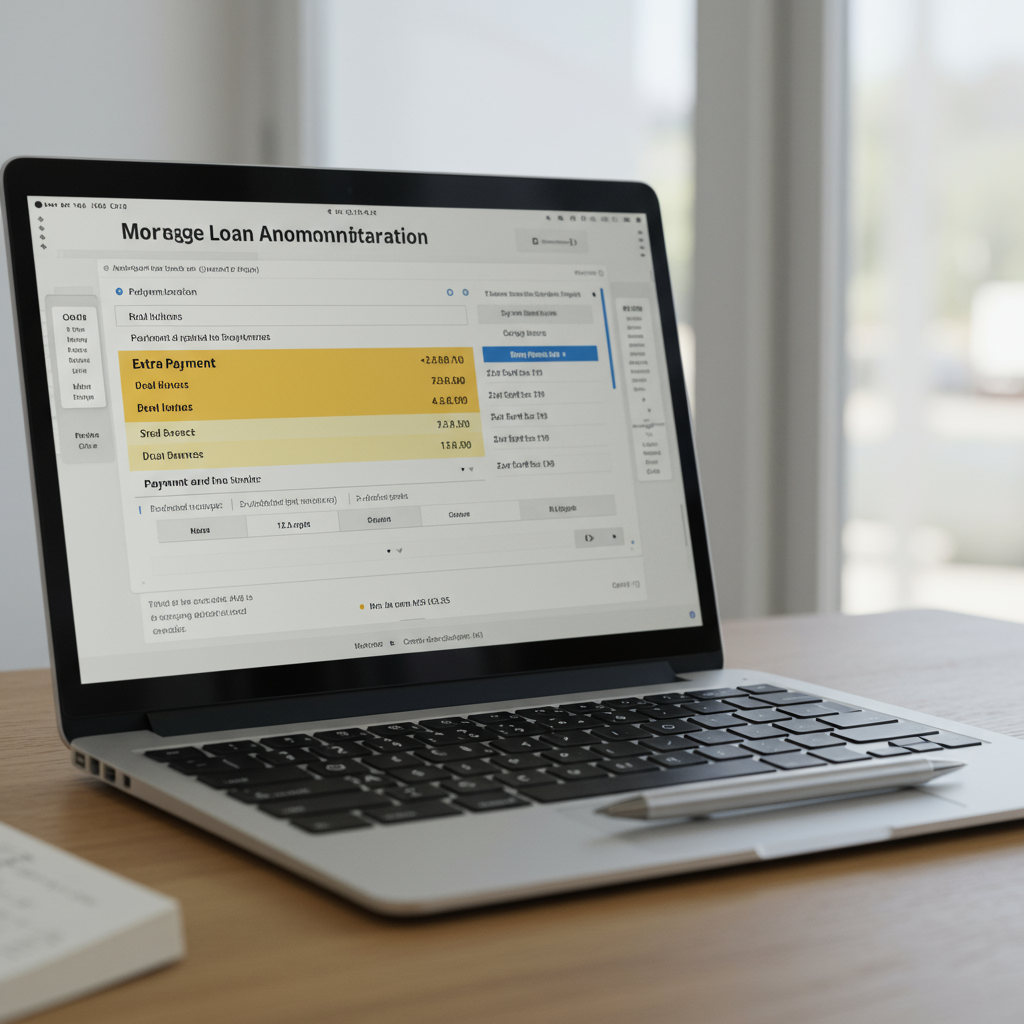
Understanding the full dynamics of mortgage loan amortization is essential for homeowners who want to manage their loans effectively and achieve financial freedom sooner. Building on the introductory overview of mortgage loan amortization calculators and the impact of extra payments, this discussion dives deeper into how amortization works and the transformative effect of making additional payments on your mortgage. We’ll explore the fundamental components of amortization along with a detailed look at the types of extra payments and their tangible benefits. Furthermore, practical guidance on using an amortization calculator optimized for extra payments will empower you to plan strategically and maximize your savings.
Understanding Mortgage Loan Amortization and Its Components
Mortgage loan amortization is the process by which your mortgage balance is gradually reduced through scheduled payments over the loan term. Each payment you make is divided between interest and principal amounts, with a decreasing portion going toward interest and an increasing share reducing the principal as time progresses. This structured approach ensures you pay off your loan completely by the end of the term, but understanding how each part interacts is crucial for effectively managing your mortgage. Familiarizing yourself with these concepts lays the groundwork for leveraging an amortization calculator to optimize your repayments and financial outcomes. To get a firm grasp on detailed mortgage payment structures, our mortgage payment breakdown guide offers comprehensive insights.
Breaking down amortization into its key components reveals why your mortgage payments change the way they do during the life of the loan. The principal balance is the original loan amount minus the accumulated payments that have gone directly toward reducing this debt. The interest rate set by your lender determines how much interest accrues on the remaining balance each payment cycle. The loan term, often 15 or 30 years for fixed-rate mortgages, sets the overall schedule of your payments, influencing monthly amounts and total interest. Viewing your monthly payment as a split allocation between principal and interest highlights why early payments primarily cover interest, while later ones chip away more effectively at the principal.
Key Aspects of Mortgage Amortization Explained
To better understand mortgage amortization, consider the following essential factors that dictate how your mortgage evolves over time:
- Principal Balance: This represents the total amount borrowed initially, gradually reduced as you make payments. As your principal shrinks, interest charges decrease since they are based on the remaining balance.
- Interest Rate: The fixed or adjustable percentage rate that determines your cost of borrowing. Lower rates reduce your interest burden, enabling faster principal reduction or lower monthly payments.
- Loan Term: The total length of your mortgage defines the amortization schedule. Longer terms lower monthly payments but usually increase total interest paid, while shorter terms require higher monthly payments but reduce interest costs dramatically.
- Monthly Payment Breakdown: Each payment includes both principal and interest portions. Initially, interest dominates the payment composition, but over time the principal share increases, accelerating loan payoff.
How Extra Payments Impact Your Mortgage Amortization Schedule
Making extra payments outside your regular mortgage schedule can drastically alter your amortization timeline and interest costs. By applying additional funds directly to your principal, you reduce the outstanding balance faster, which in turn lowers the future interest that accrues. This strategic approach not only shortens your loan term but also offers substantial savings over the life of the mortgage. Whether you’re tackling your mortgage with lump sum payments or steadily increasing your monthly contributions, understanding the types and benefits of extra payments enables you to make informed decisions that best fit your financial goals.
Extra payments are flexible tools in mortgage management, allowing homeowners to accelerate debt reduction efficiently. When leveraged with an amortization calculator designed to incorporate extra payments, you can simulate various scenarios to find the most effective payment strategies. This empowers you to visualize how much time and money you can save by making additional contributions. For practical application, our mortgage calculator for extra payments is an excellent resource to experiment with different payment plans and understand their impacts clearly.
Types of Extra Payments and How They Work
Extra payments can take several forms depending on your financial circumstances and preferences. Each type has its own advantages and considerations to help you boost equity and save on interest efficiently:
- Principal-only Payments: These payments go directly to reducing your principal balance without affecting your scheduled interest payment. This reduces future interest costs immediately and shortens your loan tenure effectively.
- Lump Sum Payments: Occasional large payments, such as tax refunds or bonuses, applied directly to principal can significantly accelerate payoff. Their impact is often visible quickly in updated amortization schedules, especially if made early in the loan term.
- Increased Monthly Payments: Consistently paying more than the minimum monthly amount creates steady principal reduction. Even a small increase each month can accumulate substantial interest savings over the long term.
Benefits of Making Extra Mortgage Payments
Strategically making extra payments offers multiple advantages that positively affect your financial stability and home equity growth. Key benefits include:
- Reducing Total Interest Paid: Extra payments lower the principal faster, which directly cuts down the interest you owe, often saving thousands of dollars over the life of the loan.
- Shortening Loan Term: By accelerating principal repayment, you can pay off your mortgage years ahead of schedule, freeing up future income for other financial goals or retirement savings.
- Building Equity Faster: Extra payments increase your home equity more quickly, which can be useful for refinancing, selling, or obtaining home equity loans when needed.
- Improved Financial Security: Reducing mortgage debt enhances your overall financial health, providing more cash flow flexibility and reducing stress related to long-term obligations.

Navigating the complexities of mortgage loan amortization is a crucial step toward gaining financial control over your home loan. This article has illustrated how a mortgage loan amortization calculator, especially when combined with extra payments, can dramatically influence your repayment timeline and reduce the total interest paid over the life of your mortgage. By understanding how your monthly payments are allocated between principal and interest, you can make strategic choices that accelerate equity growth and shorten your mortgage term effectively.
Extra payments, whether made as principal-only contributions, lump sums, or increased monthly installments, serve as powerful tools to reduce the overall cost of your mortgage. These payments directly lower the principal balance, which in turn decreases the interest that accrues over time. The article also emphasized common misconceptions around extra payments, debunking myths such as automatic application toward future payments or widespread prepayment penalties. Armed with this knowledge, homeowners can confidently assess their options without fear of penalties or wasted effort.
Using a mortgage loan amortization calculator with extra payment features provides an insightful way to visualize the impact of different repayment strategies. Inputting your loan amount, interest rate, term, and planned extra payments into a user-friendly calculator reveals updated schedules, interest savings, and payoff dates. This empowers you to make informed decisions tailored to your financial goals. Not only does this tool promote transparency in your mortgage journey, but it also encourages proactive participation in managing your debt.
To move forward effectively, consider these actionable steps: first, select a reliable mortgage calculator online that offers customization for extra payments and detailed breakdowns. For further guidance on choosing and using such tools, our comprehensive mortgage calculator guide is an excellent resource. Next, experiment with various extra payment amounts—whether small monthly increments or larger periodic lump sums—to see how each impacts your loan timeline and interest savings. To deepen your strategy, learn about how to pay off your mortgage early and how to calculate mortgage payoff precisely, which can provide the confidence to make financial moves that align with your goals.
Finally, pursuing professional advice from a mortgage advisor can be highly beneficial, especially if your loan structure is complex or you wish to understand potential tax implications better. A mortgage expert can help tailor a payoff plan that maximizes your benefits while avoiding common pitfalls.
Taking control of your mortgage through informed use of amortization calculators and smart extra payments opens the door to financial freedom and peace of mind. By leveraging these tools and insights, you are empowered to reduce your debt responsibly and achieve homeownership goals with greater efficiency. Remember, every extra dollar paid wisely today is a step closer to owning your home outright tomorrow.